
Belladonna
Beautiful and Dangerous

Belladonna is one of the most well-known poisonous plants in the world. Also called deadly nightshade, it doesn’t take much to cause serious harm—small doses can be toxic, and in high enough amounts belladonna can be fatal. As few as 10 leaves can be toxic, causing lethargy, coma, and flushed skin. However, despite the low dose for poisoning, belladonna has played a part in medicine – and beauty – since antiquity.
One of its most famous effects is pupil dilation. When applied to the eyes, belladonna causes the pupils to widen dramatically, creating a large, “blown-out” look. During the Italian Renaissance, some people used belladonna eye drops as a cosmetic to appear more attractive—large pupils convey romantic interest and attraction. It is from this practice (possibly) that the name of the plant is derived in its Italian origins: Bella (beautiful) Donna (woman). For medicinal use, the plant was used in ancient Greece for its hallucinogenic and pain-relieving properties.
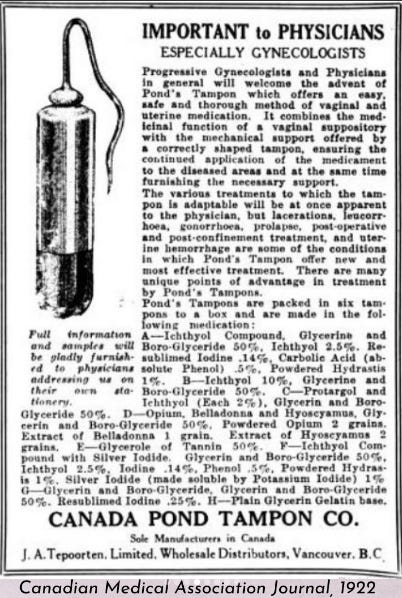
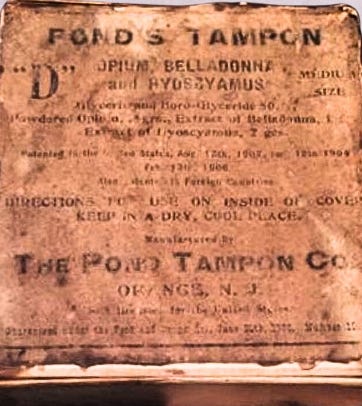
By the Victorian era, belladonna was used in a variety of medicinal preparations, one of which is housed at the New Orleans Pharmacy Museum in the opiates exhibit. Pond’s Tampons contain belladonna for the purpose of relieving cramps – in addition to opium for pain relief. These tampons were not used as they are today, but rather used by physicians for medical diagnoses such as a miscarriage or extremely severe pain.
In theory, belladonna made sense for this use—it can relax smooth muscle and decrease spasms. In practice, however, it was far more complicated. This method of administration, as well as the use of un-processed leaves, would administer different dosages depending on the plant and person.
Today, the use of belladonna in medicine lives on with the use of atropine, a concentrated version of the plant’s most potent properties, to treat dangerously low heart rates, and in scopolamine, which is used to treat motion sickness.
Works Cited:
Berdai, Mohamed Adnane, Smael Labib, Khadija Chetouani, and Mustapha Harandou. 2012. “Atropa Belladonna Intoxication: A Case Report.” The Pan African Medical Journal 11 (April): 72.
McGarry, Ronald C., and Pamela McGarry. 1999. “Please Pass the Strychnine: The Art of Victorian Pharmacy.” Medicine in Canada. CMAJ 161 (12): 1556–58.
Nikandish, Mehrasa, Pharmacology Student, London Mohamad, and Nikandish Researcher. 2024. ESI Preprints Not Peer-Reviewed Exploring the History, Uses, and Dangers of Belladonna: Unveiling the Mysteries of the Deadly Nightshade. https://doi.org/10.19044/esipreprint.3.2024.p544.