
Drapetomania
Monomania and the Medicalization of Deviance

Medicine is not apolitical. Being concerned with health and the way one gets back to health (and even what “healthy” means and looks like) are all things intrinsically intertwined with prevailing norms.
It is particularly important to comment on the many and varied ways mental illness has been used against people. For many, the stereotypical example of this is hysteria. However, the definition of deviance as medical has a long and storied history, one of the most oppressive examples of which is the concept of “drapetomania,” which was introduced by Dr. Cartwright in 1851 and published in New Orleans’ De Bow’s Review.
In keeping with contemporary times, Dr. Cartwright used the terminology of the “monomanias” to define the diagnosis. Just as setting fire is seen as unnatural or disordered, and thus “pyromania” is defined, “drapetes” is from Greek, meaning “Runaway,” and defines what historian Harriet Washington defines scathingly as “a lack of enthusiasm for slavery.” For Cartwright, and many of his contemporaries, the idea that enslaved people would seek to escape bondage was not just something that undercut the bottom line of enslavers, but was on its face against the natural order of things. So much so, in fact, that any enslaved person who thought otherwise must, assuredly, be insane.
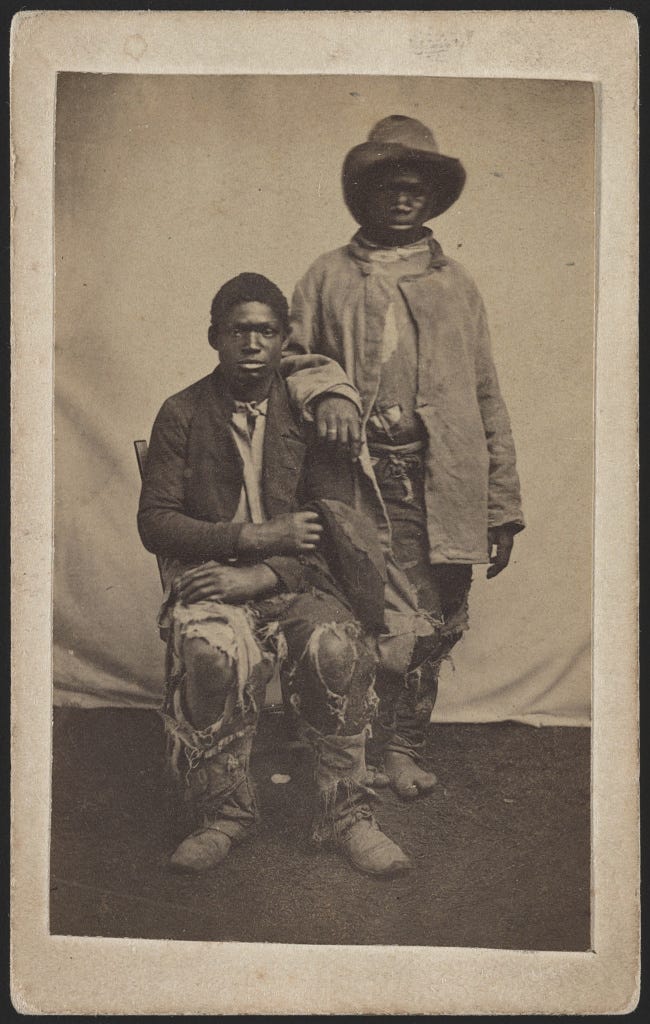
For Dr. Cartwright, this ‘disease’ was caused by enslavers who “made themselves too familiar with them […]; and, on the other hand, those who treated them cruelly,” and did not keep the people they enslaved “in the position that we learn from the Scriptures he was intended to occupy.” Dr. Cartwright’s recommended treatment, as he laid out in the New Orleans’ paper, was to exact the “awe and reverence” he thought that enslavers deserved. To do this, he recommended the following particularly harrowing prescription: “whipping them out of it […] whipping the devil out of them.”
Dr. Cartwright’s opinion on this matter was considered to be very influential, as in 1851 he occupied a position of “Professor of Diseases of the Negro” at the University of Louisiana, where he (a prominent white physician and future physician for the Confederacy) was considered to be a foremost expert on the topic. While it was never rigorously established in any diagnostic manuals or widely adopted, it gave language to pro-slavery physicians to use as a weapon against anyone who sought to fight back, and language that could specifically be used in a court of law.
Dr. Cartwright and his constituents also had some vested interest in defining enslaved individuals who behaved in ways they didn’t like as “insane”—Louisiana Civil Code at the time defined specific “protections” if an enslaver purchased an enslaved person with a “defect,” such as insanity (including ‘a habit of running away’). Those “protections” entitled the buyer to their money back on the purchase. Thus, for Dr. Cartwright, this description served not only to allow him to affirm his belief in a “natural order” that defined the enslavement of African people as part of a righteous and ordained action, but also to provide an avenue for enslavers to air their grievances with each other monetarily if the human they purchased did not behave according to their expectations.
Dr. Cartwright’s publication engaged with two differing ways in which science and religion were both used to keep enslaved individuals in bondage, by carefully both appealing to religious texts to declare the system of enslavement ‘natural,’ while also defining any protest as not just abnormal but as an illness that needed to be ‘cured’—in fact, to not do so (to engage with the concept of equal rights) – was to be negligent towards their healthcare:
“That it should have escaped the attention of the medical profession can only be accounted for because its attention has not been sufficiently directed to the maladies of the [African] race.” (Burwell, William M., Edwin Bell, R. G. Barnwell, and J. D. B. De Bow. 1853. “De Bow’s Review.” De Bow’s Review, Industrial Resources, Statistics, Etc. (New Orleans), 21 v. pg. 331–36.)
It is difficult to enunciate how influential Cartwright was as a physician, although historians have stated in the past that his publications represented an “an extreme within the range of ‘scientific argument’” even within the South during this period. Importantly, though, the extremes of an argument that are nevertheless platformed and given attention to have long-ranging implications. For example, regardless of how it was taken at the time— news of his publication certainly reached north, as by 1855 a scathing rebuttal of Cartwright’s opinions would be published in the Buffalo Medical Journal with the following tongue in cheek analysis of why the author and his northern constituents never encountered the “illness” Cartwright described:
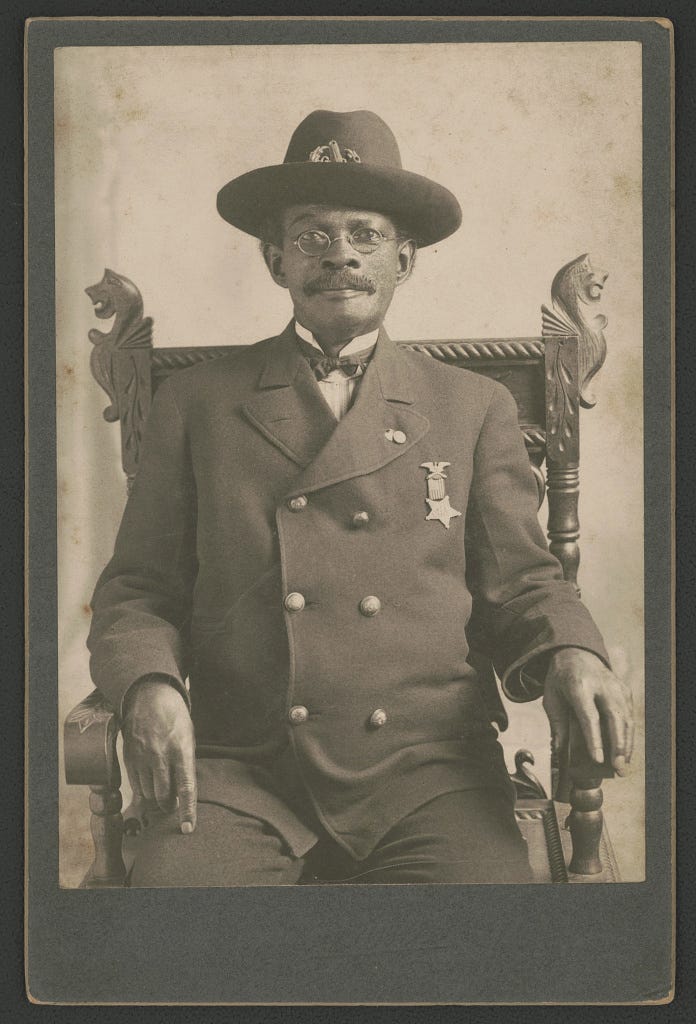
“The disease does not exist north of the great chain of lakes — or rather its distinguishing symptom is lost — the tendency to hyperborean progression disappearing, the nervous system resuming its natural status […]. The system, however, never entirely recovers from the shock, and consequently a disposition to return southward is never manifested. The patient, upon arriving at the northern shore, has a sudden convulsion […] and on coming out of this convulsive action is to all appearances well” (Buffalo Medical Journal and Monthly Review of Medical and Surgical Science. 1855, emphasis per author)
Works Cited:
Buffalo Medical Journal and Monthly Review of Medical and Surgical Science. 1855.
Burwell, William M., Edwin Bell, R. G. Barnwell, and J. D. B. De Bow. 1853. “De Bow’s Review.” De Bow’s Review, Industrial Resources, Statistics, Etc. (New Orleans), 21 v. pg. 331–36.
Myers, Dr Bob. 2014. “‘Drapetomania’: Rebellion, Defiance and Free Black Insanity in the Antebellum United States.” UCLA. https://escholarship.org/uc/item/9dc055h5.
Online, Dickens Journals, and Dr Torben Kuseler. 1856. `Slaves and Their Masters’ by W[Illiam] H[Enry] Wills, Eliza Lynn Linton. no. 335.